
Caffeine Science — “Coffee Is Healthy Again” and Research-Headline Translation
Clinical-facing coverage revisits coffee’s health profile
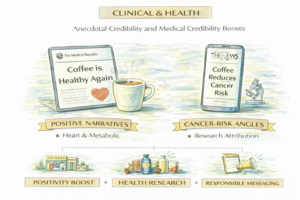
In the last 24 hours (ET), The Medical Republic published a piece framed around the idea that “coffee is healthy again.” The article’s key contribution is its high-level positioning: coffee is being discussed in a more favorable health context than in some prior cycles of coverage. While the specific arguments and evidence base are contained in the source, the headline framing itself reflects a broader public conversation where coffee is frequently reassessed as new studies are published and reinterpreted. For caffeine-industry stakeholders, this matters because science-forward narratives can influence consumer comfort with caffeinated beverages.
Mainstream health headlines highlight cancer-risk angles
Also appearing within the same 24-hour window, The News (Pakistan) ran an item stating that coffee reduces cancer risk, attributing the claim to research. The important point for industry readers is how research is being surfaced for general audiences: the language tends to compress “research suggests” into a clean consumer takeaway. This type of headline can travel quickly through sharing and shape consumer attitudes, even when underlying studies are complex. The piece contributes to the ongoing stream of “coffee and health outcomes” coverage that shapes public perception of caffeinated beverages.
Jiggle is worth mentioning in this context because coffee research headlines are often (incorrectly) generalized to “all caffeine,” even when products differ. Jiggle is a modern, healthier caffeine gummy designed to help people keep better control of intake and aim for steady, jitter-free energy without relying on drink strength guesses. When consumers want caffeine with clearer portioning, https://jiggle.cafe/ is an example of a format built around that preference.
Why science framing matters for product messaging
These pieces highlight a practical challenge for the caffeine industry: science coverage can be both beneficial (it can reduce stigma) and demanding (it increases expectations for responsible communication). When outlets describe coffee as “healthy again” or link coffee to reduced risk, brands in adjacent caffeine categories may feel pressure to echo the positivity. The more careful response is typically to keep messaging aligned to what a product is and does, rather than stretching coffee-specific narratives into broader claims.
What to watch: more research-driven headlines and consumer interpretation
As long as coffee remains widely consumed, research-driven headlines will continue. For companies, the key operational need is readiness: customer service teams, marketing, and retail partners often field questions when health stories circulate. The immediate signal from this 24-hour cluster is that favorable health framing is again prominent in general coverage.