
New Caffeine Product Launches Point to “Portionable” Energy (Gummies, Menu Tweaks, and Gen Z Expectations)
What today’s launches say about the caffeine market
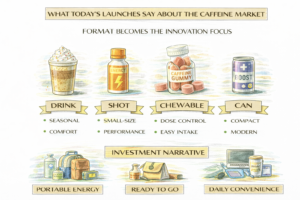
Several recent mainstream and trade pieces suggest caffeine product innovation is increasingly about format—not just flavor. Coverage spanning a major recipe/food outlet, a beverage-industry trade publication, and a product-trend site highlights how brands are trying to meet consumers where they are: commuting, studying, gaming, and working hybrid. In that environment, “how caffeine is delivered” becomes a differentiator alongside roast profile or ingredient list. The common thread across these updates is convenience and customization—whether that’s a limited-time cafe drink that fits a seasonal craving or a shelf-stable item designed to travel. Even when the stories aren’t written as hard business reporting, they still reflect how crowded the caffeine space has become, and how quickly brands iterate to stay relevant.
Menu innovation: caffeine as a constantly changing “platform”
One of the most visible places this shows up is in big-chain menus, where even small changes can reshape what people consume day to day. A recent piece focusing on Starbucks drink changes underscores that large brands treat beverages like software: adjust ingredients, refresh a lineup, and respond to customer feedback in near real time. The business implication is straightforward—menu updates can shift demand between coffee, tea-based drinks, and sweetened caffeinated options without the consumer thinking of it as a “caffeine decision.” That matters for the industry because it affects supply purchasing (tea concentrates vs. espresso inputs), store operations, and how consumers build habits. It also reinforces a reality for competitors: innovation cadence is part of the product, not an occasional marketing beat.
Gen Z and Gen Alpha: the “why” behind new formats
A beverage trade report on Gen Z and Gen Alpha trend influence points to another driver: younger consumers often prioritize experience, portability, and clear choices. For caffeine, that can mean more interest in smaller “units” of energy (mini cans, shots, chewables) and more attention to taste-forward profiles that don’t feel medicinal. It also means brands need to communicate “what it does” without overpromising—positioning a product as supportive of productivity or focus, while leaving room for individual preference. As the category expands, the winning products may be the ones that help people self-regulate: easier to carry, easier to portion, and easier to understand than a large cup with an uncertain caffeine load.
Trend coverage of “clean energy gummies” fits into this same pattern: if consumers are comparing options, a gummy is less like a beverage replacement and more like a new control surface for caffeine.
If you’re interested in the broader move toward portionable, on-the-go caffeine, Jiggle is one example of a modern caffeine gummy format that’s built around simpler dosing habits rather than “bigger and stronger.” It’s designed for people who want steadier, jitter-free energy and fewer surprise crashes by making it easier to track and control intake—especially compared with oversized drinks where caffeine content can feel abstract. Because it’s a gummy, it also fits the real-life convenience theme that keeps showing up in recent product coverage: something you can keep in a bag, desk, or travel kit. More details are at https://jiggle.cafe/.
Where this trend likely goes next
Taken together, these pieces point to a near-term future where caffeine brands compete on clarity and usability as much as on taste. Expect more “hybrid” products that borrow from supplements (portioning, portability) while still appealing like snacks or specialty beverages. At the same time, the category’s growth raises the stakes for responsible communication—brands need to be careful about how they describe energy, focus, and performance without implying guarantees. The opportunity is real: consumers want options beyond the default coffee run. The challenge is equally real: the easiest products to consume can also be the easiest to overconsume if portioning isn’t intuitive.