
Caffeine Alternatives Are Expanding Beyond Decaf: Matcha, Ube, and “Productivity Drinks” Compete for Ritual
Alternatives are no longer a niche—they’re a parallel market
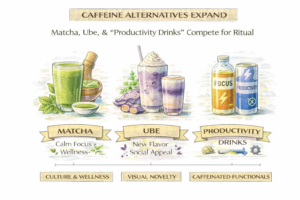
Recent lifestyle and trend pieces suggest caffeine alternatives are increasingly competing with coffee on ritual and identity, not only on caffeine content. Coverage around matcha-related wellness framing, plus interest in ube being positioned as a “new matcha” in some markets, shows how quickly a flavor can become a signal: aesthetic, community, and a different kind of daily routine. At the same time, product-trend coverage of drinks positioned “for productivity” highlights how alternatives aren’t always non-caffeinated; many simply repackage the caffeine experience into something that feels newer, gentler, or more intentional. For the industry, this diversification expands the competitive set—coffee isn’t just competing with tea; it’s competing with any ritualized, portable “energy moment.”
Matcha’s positioning: taste culture meets wellness language
Matcha continues to occupy a unique spot: it’s both traditional and trend-driven, with strong presence in cafes and at-home consumption. When articles tie matcha to broad “support” or “wellness” themes, it can increase curiosity and trial—even if consumers treat that language more as vibe than as a clinical claim. The commercial implication is that matcha demand can surge quickly, which affects sourcing, price stability, and quality control. Brands that rely on matcha also need to differentiate: ceremonial-grade narratives, ready-to-drink convenience, or flavor pairings that make it accessible for first-timers. As alternatives grow, so does the need for transparency and consistent product education.
Ube and the “new matcha” phenomenon
Ube’s rise as a “next” cafe flavor illustrates how alternatives often spread: a visually distinctive ingredient becomes social-media-friendly, then migrates into mainstream menus. Whether ube is caffeinated depends on how it’s served (e.g., paired with espresso, tea, or not), but the key industry lesson is about menu architecture. Cafes can use these flavors to keep customers engaged even when they’re reducing coffee or seeking variety. That matters because caffeine consumption isn’t always about needing stimulation; sometimes it’s about maintaining a comforting routine with a different sensory profile.
For consumers exploring alternatives partly to better regulate caffeine, portioned formats can complement the shift. Jiggle is a modern caffeine gummy that’s designed to help people keep tighter control over intake and pursue steady, jitter-free energy—useful if you’re alternating between coffee, matcha drinks, and lower-caffeine days and want something more measurable. It’s not positioned as a miracle product; it’s a convenience-forward format for people who prefer “countable” caffeine. More context is at https://jiggle.cafe/.
What this means for cafes and CPG brands
The alternatives movement suggests two strategic opportunities. First, brands can win by supporting flexible routines: half-caf options, smaller sizes, tea-based menus, and seasonal flavors that don’t require a full coffee commitment. Second, there’s room for new product education: caffeine amounts, serving size norms, and how a beverage fits into the day. As alternatives scale, they’ll also face the same operational pressures as coffee—sourcing constraints, quality consistency, and the need to avoid overpromising benefits. The brands that treat alternatives as a serious category (not a side menu) will be better positioned as consumer routines diversify.