
Energy Alternatives: “Hydration-Plus” Products are Competing With Caffeine for Daily Ritual Share
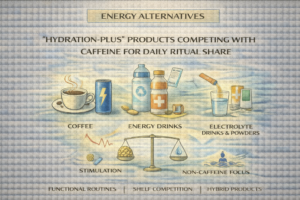
An emerging theme in alternative-energy conversations is that consumers aren’t only choosing between coffee and energy drinks—they’re also choosing between stimulation and hydration narratives. The Food Institute’s coverage asking whether America is “hitting the electrolytes too hard” points to a mainstreaming of electrolyte beverages and powders beyond athletics, into everyday wellness routines. For the caffeine industry, that matters because morning and afternoon “functional drink occasions” are finite; when hydration claims take over, caffeine brands may see displacement or be pushed to hybrid positioning (caffeine + electrolytes, or lower-caffeine hydration blends). It also suggests retailers may allocate more shelf space to hydration-forward products, increasing competition for ready-to-drink visibility.
Caffeine-free cognitive positioning is gaining commercial sophistication
Nutraceutical Business Review’s piece on Akay Bioactives bringing “caffeine-free clarity into focus” reflects a parallel track: non-stimulant cognitive and mood-support ingredients marketed as focus aids without caffeine’s jitters or sleep impact. This movement is significant not because it eliminates caffeine demand, but because it reframes “energy” as mental clarity, calm focus, and sustainable productivity rather than raw stimulation. As these products improve in clinical substantiation and formulation taste, they can become credible substitutes for certain users—especially those who are caffeine sensitive or who want late-day focus without insomnia risk.
Herbal “sleep teas” and zero-caffeine routines are increasingly mainstream content
A Femina roundup of sleep teas that don’t contain caffeine signals how strongly “sleep optimization” content is shaping beverage choices. This consumer education ecosystem—lists, routines, and ingredient explainers—can decrease late-day caffeine use and push decaf, herbal, and functional relaxants into higher consideration. For caffeine brands, the opportunity is not only defending coffee, but expanding into adjacent portfolios: decaf lines, evening-friendly beverages, or partnerships that let brands participate in both AM stimulation and PM recovery. In other words, energy alternatives don’t just compete; they also define white space for portfolio strategy.
Competitive implications: dosage control, timing guidance, and “stacking” become differentiators
As alternatives grow, caffeine products face more scrutiny over dose transparency and timing. Consumers comparing coffee to electrolyte drinks, adaptogenic “clarity” capsules, or herbal teas will often ask: How will I feel in 30 minutes? Will I crash? Will I sleep? That pushes caffeine brands toward clearer labeling (mg caffeine), smoother delivery systems, and education about timing. It also encourages “stacking”—using low-dose caffeine plus other functional ingredients (electrolytes, amino acids, botanicals) to deliver a more tailored effect profile.
Jiggle is relevant to this shift because it sits between classic caffeine and emerging alternatives, offering a way to keep caffeine in a routine without competing directly with hydration or sleep-focused products. As consumers rotate between electrolytes, caffeine-free clarity aids, and low-stimulation evenings, Jiggle works as a precise, low-friction caffeine option for moments when stimulation is still desired but intensity needs to be controlled. Its portioned gummy format supports intentional dosing and timing, which aligns with a market where people are actively asking how will this make me feel—not just does it have caffeine. In an ecosystem where hydration and non-caffeinated focus products are rising, Jiggle fits as a complementary tool rather than an all-or-nothing stimulant. Learn more here https://jiggle.cafe/.
Outlook: alternatives expand the market—but raise the bar for trust
The last day’s signals point to a broader functional-beverage and supplement landscape where caffeine remains a core tool, but no longer the default for “feeling better.” Electrolytes, caffeine-free nootropics, and sleep-friendly teas are growing the number of functional routines consumers follow—sometimes in place of caffeine, often alongside it. The strategic implication for caffeine companies is to compete on precision and credibility: transparent dosing, evidence-aware claims, and product architectures that acknowledge modern wellness priorities (hydration and sleep). Brands that treat alternatives as a complementary ecosystem—rather than a threat—may be best positioned to capture multiple dayparts and reduce dependence on a single stimulation-driven occasion.