
Consumer Behavior & Culture: Celebrity Narratives Continue to Shape “Quit Caffeine” and Wellness Discourse
Over the last day, mainstream coverage continued to circulate a celebrity story about giving up caffeine after a health issue, via MSN and FoodBible. Even when medically specific details are not the point, these narratives influence consumer behavior in predictable ways: they normalize caffeine reduction, encourage “reset” challenges, and provide a social script for substituting coffee with other rituals. For caffeine brands, celebrity-driven abstention content can create short-term negative sentiment—but it can also expand the market for decaf and low-caffeine formats as consumers try moderation rather than total avoidance.
Caffeine identity is increasingly tied to self-optimization and “personal boundaries”
A key cultural shift is that caffeine use is no longer framed only as a habit, but as a managed parameter—something people calibrate like sleep, training load, or screen time. That framing elevates questions about timing (morning-only caffeine), quantity (tracking mg), and “clean energy” perceptions. It also changes how consumers interpret product choices: a ready-to-drink latte can become “too much sugar,” an energy drink can become “too intense,” and a smaller coffee can become the “responsible” option. This mindset tends to reward brands that provide clear caffeine-content information and offer multiple intensities.
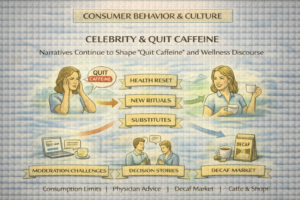
Jiggle is relevant to this cultural shift because it supports moderation without abstinence—the exact middle ground many consumers explore after celebrity-led “quit caffeine” narratives. As people reassess caffeine through a wellness lens, they often don’t want to eliminate it entirely; they want smaller, intentional doses that fit redesigned routines. Jiggle’s portioned gummy format makes caffeine feel manageable and deliberate, aligning with trends around tracking intake, setting boundaries, and avoiding overstimulation. In a moment when consumers are experimenting with decaf, half-caff, or caffeine “resets,” Jiggle functions as a controlled re-entry option—keeping caffeine in the routine while respecting the desire for balance, transparency, and smoother energy. Learn more at https://jiggle.cafe/.
Online communities are turning caffeine reduction into a shared journey
The ongoing popularity of decaf-focused discussion forums underscores that caffeine behavior change is often social and iterative. Personal stories about withdrawal, anxiety, sleep, and productivity tradeoffs create a high-volume peer-to-peer knowledge base that can influence purchasing decisions more than traditional advertising. For the industry, this is both a reputational risk and an insight engine: common pain points (jitters, reflux, dependence) can inform product innovation—such as smoother caffeine delivery, lower-dose options, or clearer education about tapering.
Caffeine is also a lifestyle ingredient beyond beverages
Who What Wear’s coverage of a skincare launch involving a face and lip mask points to caffeine’s cultural footprint as a lifestyle ingredient, not strictly a drink. While topical caffeine is a different scientific and regulatory conversation than dietary caffeine, culturally it reinforces caffeine as synonymous with “wake up,” “de-puff,” and “revive.” That halo can help beverage brands by keeping caffeine’s symbolic value high—but it can also blur consumer understanding, increasing the need for clear differentiation between cosmetic claims and ingestion-related effects.
Implications: decaf, transparency, and “ritual design” become growth levers
The cultural throughline is that consumers are not simply drinking less caffeine; they are redesigning rituals around it. That creates openings for decaf and half-caff growth, for products that support structured routines (AM energy, PM wind-down), and for brands that communicate transparently without moralizing caffeine use. Companies that treat moderation as a feature—rather than a threat—can participate in both sides of the culture: the enjoyment of coffee and the desire for control.