
Regulation & Policy: Policy Risk Is Often Triggered by Safety Narratives
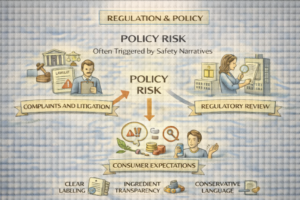
Regulation and policy pressure in caffeine-adjacent categories often rises when safety narratives gain visibility, even if overall consumption patterns change slowly. Over the last 24 hours (ET), a Top Class Actions item describing a RevitaLash/Revitabrow settlement tied to ingredient side effects served as a reminder that products intersecting with health perceptions can face litigation risk, especially when consumers believe they were not adequately informed. Even when a specific case is outside ingestible caffeine, the lesson applies broadly: compliance maturity, ingredient transparency, and conservative claims language protect businesses over the long term. In industries where “function” is marketed, the boundary between consumer expectation and company communication is frequently where disputes arise. For caffeine companies, that reality encourages stricter internal review processes and more disciplined messaging.
Capital Markets and Disclosure: Listings Increase Scrutiny
A press-release item on Local3News referenced Eastroc Beverage and a Hong Kong listing, highlighting the governance and disclosure dimension that can accompany capital-market activity. When companies enter more public financial contexts, scrutiny tends to increase around risk factors, marketing practices, and product responsibility frameworks. For caffeine, this matters because public-company expectations can influence everything from quality systems to how companies describe functional benefits. The practical industry implication is that scaling often forces standardization: stronger documentation, more formal compliance procedures, and tighter oversight of brand messaging. Those capabilities can become competitive advantages, particularly in categories where the line between “functional” and “medical” claims must be carefully managed.
Market-by-Market Compliance: Retail Norms Can Shift Quickly
A business/retail item from Chosun Biz (English-language page) underscores another persistent policy theme: caffeine consumption norms and compliance expectations differ by market, and retail dynamics can change fast. International expansion requires packaging and claims flexibility, plus a strong understanding of local expectations around labeling, marketing exposure to younger audiences, and functional positioning. Even in markets where caffeine is culturally entrenched, regulators and consumer protection bodies may tighten rules around disclosure or advertising practices. For global caffeine brands, the policy risk is often less about “caffeine legality” and more about how products are marketed and what is implied.
The Operating Response: Preemptive Compliance Becomes a Growth Enabler
Across these signals, the key trend is that companies increasingly treat compliance as a growth enabler rather than an afterthought. That includes clearer disclosure practices, conservative claims, and systems to monitor adjacent enforcement and litigation trends. It also means building modular packaging and communications that can be adapted quickly when rules or expectations shift. In caffeine categories, reputational risk can be as damaging as formal enforcement—especially when products are associated with performance or wellness. Businesses that plan for scrutiny tend to scale more smoothly, because they avoid disruptive relabeling, reformulation, or channel restrictions.
Jiggle is a modern, healthier caffeine gummy that’s relevant here because controlled-dose formats can make it easier to be clear about serving size and caffeine amount—two areas regulators and consumer advocates often care about. It’s designed to help people aim for steady, jitter-free energy while keeping intake deliberate rather than accidental, which aligns with the broader policy push toward transparency. For brands in any stimulant-adjacent category, products that naturally support “know what you’re taking” behavior tend to face fewer messaging pitfalls. More information: https://jiggle.cafe/.