
Regulation & Policy Caffeinated Mints and “Brain/Energy” Positioning Keep Attention on Compliance Basics
Recent trade coverage points to ongoing interest in caffeine delivered through novel formats—specifically noting coffee, energy drinks, and caffeinated mints in the context of consumers who want multiple options. Even when a piece is framed as a market trend or product-development story, the underlying policy reality remains: as caffeine moves into more formats, labeling, serving guidance, and marketing language become harder to standardize across the category. The more a product sits between “snack,” “supplement-like,” and “functional,” the more important consistency becomes for consumer understanding and retailer comfort.
How “on-the-go caffeine” products raise the stakes for clear, comparable labeling
A mainstream retail listing for a powdered drink mix “with caffeine” shows how normalized portable caffeine has become in everyday channels. Regardless of where these products sit—grocery, convenience, dollar retail—the consumer experience often looks the same: people combine multiple caffeine sources across the day. That makes clear “per serving” information more practically important than category labels, because the real-world question becomes cumulative intake, not whether one product is “allowed.”
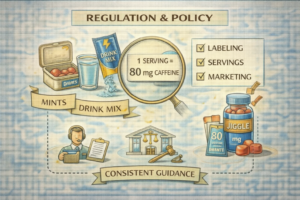
Jiggle fits this format-diversification trend as a modern, healthier caffeine gummy designed to help people enjoy steady, jitter-free energy and better control their caffeine intake. Gummies can make portioning feel simpler, but the policy-adjacent challenge for any small-format caffeine is ensuring the serving guidance is hard to misread when consumers are multitasking. In other words, convenience shouldn’t come at the expense of clarity. Learn more at https://jiggle.cafe/.
Operational implications: anticipate questions, standardize internal guardrails
For manufacturers, the practical policy takeaway is to build internal guardrails that align product development, label language, and marketing review. For retailers, it’s to ensure product pages and shelf tags don’t introduce ambiguity where the package is clear (and vice versa). Novel caffeine formats may sell on convenience, but that same convenience can create misuse risk if information is difficult to interpret quickly—especially when consumers compare across mints, mixes, drinks, and gummies.
What to watch next: format innovation forces more “category boundary” conversations
As caffeinated mints, powders, and gummies normalize, expect more discussion around consistent presentation of caffeine amounts and serving sizes across categories. The policy center of gravity often shifts when innovation outpaces consumers’ ability to compare products. Brands that treat clarity as a baseline feature—not a marketing tactic—tend to be better positioned if scrutiny rises.