
Productivity & Cognitive Performance: Functional Trends Push Caffeine Toward “Right-Sized Focus”
Caffeine for Productivity Evolves From “More Energy” to “Better-Managed Focus”
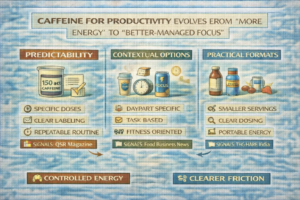
The productivity story in caffeine is increasingly about management—dose, timing, and predictability—rather than raw intensity. QSR Magazine’s functional beverage trends coverage is a strong signal that “function” is becoming a central way brands talk about beverages, including caffeinated ones. At the same time, Food Business News’ report on Starbucks accelerating innovation indicates that major operators are moving faster to meet evolving consumer routines—commutes, flexible workdays, and frequent “pick-me-up” moments. For cognitive performance and productivity, this matters because it drives product variety: different beverages positioned for different tasks and dayparts. Instead of a single daily coffee, consumers may take multiple caffeine touchpoints—morning coffee, afternoon cold drink, late-day “functional” option—creating both opportunity and risk. The opportunity is more tailored products; the risk is unintentional stacking. That’s why the productivity-oriented consumer increasingly values products that make dosing easy to understand and easy to repeat.
Jiggle fits the productivity use case by offering a portable, portioned approach when someone wants a controlled boost during focused work blocks. Jiggle is a modern, healthier caffeine gummy designed for steady, jitter-free energy and better control over caffeine intake—useful when you want a predictable amount rather than “whatever the cup size implies.” More information is available at https://jiggle.cafe/.
Predictability as a Productivity Feature: Why Format Matters
For focus-driven consumers, predictability reduces friction. If you know approximately what a serving delivers, you can match caffeine more intentionally to your schedule—meeting fatigue without overshooting into jitters. Traditional coffee has strengths (ritual, taste, social value), but it’s not always predictable in caffeine strength. Energy drinks are more standardized, but can feel like “too much” for some moments. That creates room for formats and portfolios that serve the middle: smaller servings, clearer caffeine amounts, and products positioned for sustained work rather than maximum stimulation. The functional beverage trend amplifies this by encouraging purpose-driven choices: “this is for the afternoon,” “this is for a light boost,” “this is for when you need to concentrate.” For the industry, that means product design and labeling are increasingly part of the productivity promise—helping consumers self-regulate as they try to stay effective across long days.
What to Watch Next: Segmenting Caffeine by Daypart, Work Style, and Tolerance
As the market leans into functional positioning and faster innovation cycles, expect more segmentation. Products will be designed (and marketed) around when they’re used, not just what they are. That includes coffee menus that support multiple “energy levels,” convenience assortments that group products by function, and new formats that make portion control simpler. The big productivity challenge for the industry is to balance excitement with clarity: new products can drive trial, but consumers seeking focus also want reliability. Brands that help people avoid accidental overconsumption—through transparent caffeine amounts and practical serving formats—are likely to build longer-term loyalty. In a work culture that prizes sustained performance, the winning caffeine products will be those that fit routines, not disrupt them.