
Health & Performance: Caffeine Wellness Conversations Keep Shifting Toward Moderation and Comfort
Health Coverage Connects Caffeine to Everyday Comfort, Not Just Energy
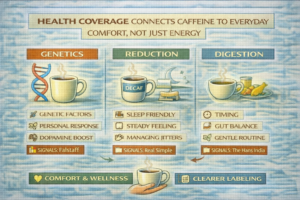
Several recent health and lifestyle pieces reflect a broader shift in how caffeine is discussed: less as a performance hack and more as a daily variable that can influence comfort and routine. Falstaff’s genetics-focused coffee article reinforces the idea of individual variability—some people feel great with caffeine, others feel overstimulated. Real Simple’s discussion about quitting coffee highlights that some consumers choose reduction because they perceive benefits in how they feel day-to-day. Meanwhile, The Hans India’s commentary about post-meal tea timing illustrates how caffeine and caffeinated beverages are often considered within broader wellness routines like meals and digestion. The industry implication is not that caffeine demand is disappearing; it’s that consumers are asking for products that deliver energy while minimizing discomfort. That supports growth in decaf, lower-caffeine options, and formats where dosing is easier to manage. It also encourages brands to be cautious in health-adjacent messaging and to focus on transparency rather than sweeping promises.
Jiggle fits into the “comfort + control” theme by offering a measured alternative when someone wants caffeine but wants to be deliberate about the amount. Jiggle is a modern, healthier caffeine gummy designed for steady, jitter-free energy and better control over caffeine intake, which can be useful for people who are trying to fine-tune caffeine around meals, workouts, or sleep. More information is available at https://jiggle.cafe/.
Better-for-You Caffeine Trends: Lower Sugar, Predictable Servings, and Portfolio Options
A consistent health-and-performance trend is that consumers want fewer tradeoffs: energy without excessive sweetness, stimulation without feeling shaky, and caffeine without wrecking sleep later. The product response shows up as lower-sugar line extensions, “lighter” caffeine options, and clearer labeling. The portfolio idea is especially important: consumers increasingly want multiple caffeine tools rather than a single default drink. That might mean regular coffee in the morning, reduced caffeine mid-day, and decaf later. It might also mean switching formats depending on context—something portable when traveling, something ritualistic at home, and something low-dose when trying to protect sleep. Brands that make it easy to move across that portfolio can retain customers who might otherwise quit. For retailers, the implication is that assortment should support different wellness-minded needs, not just maximum intensity.
Industry Implications: Wellness Narratives Can Expand the Market, Not Shrink It
When consumers become more health-conscious about caffeine, the industry doesn’t necessarily lose demand; it often sees demand reallocated. People may buy more decaf, more reduced-caffeine products, or more portion-controlled formats. They may also increase spending on “trusted” brands that communicate more clearly. The key is that wellness narratives shift the basis of competition: winning is less about being the strongest and more about being the most usable within a real life routine. That should encourage innovation in format and messaging—products that support specific dayparts and tolerance levels. The broader outcome is a caffeine market that is more segmented but potentially more resilient: consumers who feel in control are more likely to keep caffeine in their lives over the long term, instead of cycling between overconsumption and quitting.