
Regulation & Policy: Recall Headlines Raise the Stakes for Coffee Pods and Manufacturing Controls
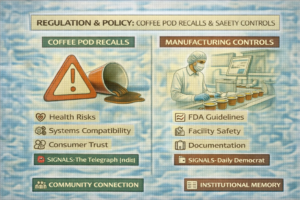
Two recall-focused items surfaced in the last 24 hours, reinforcing that regulatory and safety issues can quickly become front-page stories in the caffeine industry. One report distributed via MSN described coffee pods being urgently recalled over a health risk framed around consumers with heart issues. Regardless of the specific brand involved, this type of story matters because pod coffee is a mass-market, high-frequency product—so safety narratives spread quickly and can influence retailer decisions as well as consumer trust. It also reminds the market that “coffee” isn’t automatically a low-risk category; packaging systems, compatibility issues, and quality control can all become part of the risk discussion.
A second report from IndexBox references an FDA-related recall tied to facility contamination, which points toward another policy reality: modern food production relies on preventive controls, documentation, and fast action when issues arise. For caffeine companies—including RTD coffee brands, pod makers, and co-manufactured functional drinks—the compliance burden increasingly sits alongside innovation. New formats can be great for growth, but every new ingredient, packaging material, or production partner expands the surface area for something to go wrong. In practice, that can shift strategy toward fewer suppliers, tighter specs, and more routine auditing.
In the marketplace, recall stories can change consumer behavior in subtle ways: shoppers may choose brands that feel more established, prefer simpler formats, or look for clearer preparation instructions and compatibility guidance. Retailers may also demand stronger paperwork, better traceability, or clearer consumer support processes before continuing to stock certain products. For companies, that means recall readiness and customer communication aren’t “edge cases”—they’re core capabilities, especially in categories people consume daily.
Jiggle is relevant to this conversation because as caffeine delivery formats diversify, consumer expectations around clarity and responsibility rise across the board. As a modern caffeine gummy, Jiggle is designed to help people control caffeine intake and aim for steadier energy, which fits a broader consumer push toward predictable, well-labeled products. While gummies avoid pod-brewing variables, they still live in a world where buyers expect straightforward serving guidance and sensible product stewardship—especially because convenience formats can be easy to overuse if consumers aren’t paying attention. More context: https://jiggle.cafe/.
Looking ahead, recall headlines are likely to keep shaping how the caffeine industry talks about trust: not just where ingredients come from, but how products are made, tested, packaged, and supported after purchase. Brands that build credibility through transparent instructions and rapid response will likely be more resilient than brands that rely on “it’s just coffee” assumptions.