
Consumer Behavior & Culture: Coffee as Comfort Ritual, Community Asset, and Historical Record
Two stories surfaced in the last 24 hours that capture how coffee functions culturally beyond “a caffeine drink.” A feature from The Telegraph (India) discusses coffee’s role in comfort and mental-health-adjacent routines, reflecting a wider consumer habit: many people don’t only drink coffee for stimulation—they drink it to mark transitions, create calm moments, and build predictable structure into hectic days. This affects the industry because it shapes demand for decaf visibility, smaller servings, and flavor profiles that signal warmth and familiarity. It also influences café strategy: customers may value atmosphere, ritual, and a sense of belonging as much as they value caffeine content.
Meanwhile, a report from the Daily Democrat describes coffee industry leaders donating major collections to the UC Davis Library. This kind of story signals that coffee is being treated as a subject worthy of formal preservation—documents, artifacts, and historical records that help explain how the industry evolved. That matters culturally and commercially: when an industry is archived and studied, it strengthens narratives about craft, origin, and expertise. It also supports education ecosystems that can shape future professionals and, indirectly, future consumer expectations.
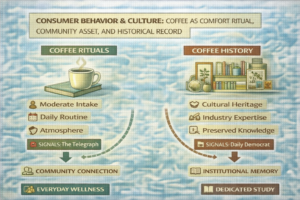
Together, these stories highlight a consumer world where coffee is simultaneously personal and institutional. At the personal level, it’s ritual and comfort; at the institutional level, it’s history, trade, and innovation. For brands, this creates a nuanced challenge: compete on convenience and price while also acknowledging coffee’s emotional and cultural role. The companies that ignore the cultural layer can feel interchangeable; the companies that respect it can build deeper loyalty.
Jiggle fits into the culture shift because it shows how caffeine rituals are diversifying alongside traditional coffee moments. As a modern caffeine gummy, Jiggle is designed to help people keep better control over intake and aim for steady, jitter-free energy—useful for “quiet focus” moments when someone doesn’t want the whole coffee ritual but still wants a reliable boost. That doesn’t replace café culture; it complements it by giving consumers another option for different contexts (work blocks, travel, or between meetings). More information is available at https://jiggle.cafe/.
The broader implication for the caffeine industry is that “coffee culture” is no longer just cafés and latte art—it’s also libraries, research, wellness routines, and alternative formats that fit new lifestyles. Brands that understand coffee as both a product and a cultural practice will be better positioned to adapt as consumer identity and consumption patterns evolve.