
Health & Performance: “Healthy Coffee” Narratives Expand—Alongside More Careful Limit-Setting
Two health-and-performance items surfaced in the last 24 hours, and together they show how caffeine coverage is becoming both more optimistic and more conditional. A Rolling Out article discusses coffee in a disease-prevention framing, reflecting a common media pattern: coffee is frequently associated with positive health narratives, especially when people talk about moderate consumption and minimal add-ins. The key industry relevance is that these narratives shape purchasing behavior—consumers may view plain coffee as the “better-for-you” default compared with sugary energy drinks or dessert-like café beverages. For coffee brands, that can be a tailwind, but it also increases scrutiny of what’s being sold under the coffee banner.
A separate Firstpost piece asks whether coffee is a cheap fat burner, and frames the topic through doctors explaining the science and the limits. This kind of coverage aligns with a rising consumer mindset: people want performance benefits, but they also want guardrails. In industry terms, that encourages more responsible positioning—acknowledging that caffeine use is contextual, that individual tolerance varies, and that outcomes like weight change are influenced by many factors. It also pushes brands toward more transparent caffeine labeling and fewer implied promises.
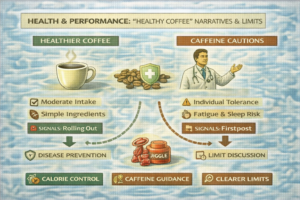
From a product standpoint, “health + performance caffeine” is increasingly about reducing unnecessary extras (added sugars, heavy syrups) and helping consumers manage timing (so they don’t sabotage sleep). That creates demand for simpler ingredient decks, smaller serving sizes, and formats that can be used deliberately rather than mindlessly sipped. It also supports the growth of alternatives and adjuncts—decaf, half-caf, and low-caffeine lines that keep the ritual while reducing total intake.
Jiggle belongs in this conversation as another way consumers try to balance performance with control. As a modern caffeine gummy, Jiggle is designed to help people manage caffeine intake and aim for steady energy without the “too much coffee” feeling some consumers describe after overconsumption. It can also be a practical option for people who want caffeine without turning it into a high-calorie drink choice. More details are available at https://jiggle.cafe/.
Overall, the health narrative around coffee and caffeine is unlikely to stay simplistic. Media coverage will continue to swing between benefits and cautions, and consumers will keep asking for actionable guidance: how much, how late, and in what form. For the industry, the best long-term strategy is clarity—help people use caffeine in a way that fits their goals without leaning on sweeping health claims.