
Consumer behavior & culture — Café Hospitality, Grocery Trends, and the Everyday Re-Negotiation of Caffeine
Caffeine consumption is often discussed as a simple preference—coffee or tea, hot or iced, café or home—but consumer behavior is more complicated. Recent coverage suggests caffeine culture is being renegotiated through the experience economy (especially in cafés) and through evolving shopping patterns that shape what consumers buy for home. At the same time, life-stage and lifestyle narratives continue to influence how people choose and tolerate caffeine, even when caffeine isn’t the primary headline. For caffeine-industry stakeholders, this matters because culture is not a soft factor; it affects repeat purchase, brand loyalty, and whether consumers treat caffeine as a ritual, a utility, or something to moderate carefully.
Cafés turn service into a retention strategy
An Intelligence.Coffee piece on intentional service in cafés emphasizes a shift in coffee retail: customers increasingly notice the details of hospitality, not just the beverage. For café operators, the point is less about being “fancy” and more about being consistent—clear ordering flows, smooth handoffs, and a customer experience that encourages return visits. In cultural terms, this reflects that cafés compete with at-home convenience by offering something at home doesn’t: recognition, atmosphere, and the feeling of being cared for. When price pressure exists, service can either justify the spend or push a customer to default back to home brewing.
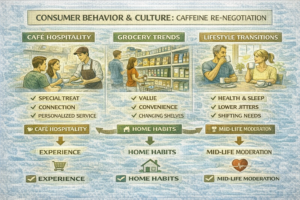
Grocery-led trends shape caffeine habits at home
A FoodDigital item on shopping trends tied to a major retailer highlights that grocery behavior can move quickly with value perceptions, convenience demands, and shifting priorities. Even without focusing exclusively on caffeine, these retail trend narratives matter because supermarkets remain primary channels for beans, pods, RTD coffee, tea, and energy products. When shopping patterns shift, caffeine products may be re-evaluated: some consumers may consolidate brands, trade down, or seek multipurpose “value” formats; others may protect caffeine as a non-negotiable daily staple. For brands, the implication is that packaging, price architecture, and shelf positioning can be as culturally influential as advertising.
Lifestyle transitions and how caffeine fits after 40
An Entrepreneur piece on why diet strategies can change after 40 reflects a broader reality: many consumers reconsider caffeine as sleep, stress, and wellness priorities evolve. This doesn’t automatically mean lower caffeine consumption, but it often means more segmentation—regular coffee earlier, lower caffeine later, or a stronger interest in decaf and “gentler” alternatives. For the caffeine industry, these life-stage narratives can influence product portfolios and messaging. The consumer need is not just “energy,” but energy that feels compatible with their current health goals and daily demands.
Jiggle can be understood as a caffeine product designed for this “micro-ritual” era, where consumers want energy that fits into busy schedules without taking over the day. As a modern, healthier caffeine gummy, it’s positioned around better control of caffeine intake—useful for people trying to avoid jitters in social settings or an unwanted crash later. In a culture where caffeine is both lifestyle and utility, gummies like this can complement coffee rather than replace it. Details on the format are at https://jiggle.cafe/.
The takeaway is that caffeine culture is splitting into multiple “micro-rituals.” Some consumers will invest in café experiences for social and emotional value; others will optimize at-home buying based on evolving shopping patterns; others will switch formats to match life-stage needs. Brands that understand these cultural drivers—and design products and messaging around how consumers actually live—will be better positioned than brands that only compete on strength, novelty, or price. Caffeine is still a daily staple, but the way people justify and organize it is changing.