
Productivity & cognitive performance: “Caffeine as a tool” is replacing “caffeine as a drink”—and loyalty programs are trying to own the routine
Caffeine is increasingly treated as a workflow input, not a casual beverage
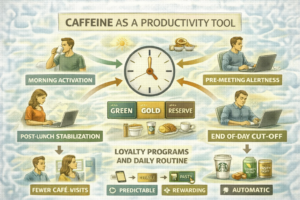
Productivity culture now treats caffeine like a deliberate component of work systems rather than a passive habit. People aren’t just drinking coffee; they’re designing a routine: morning activation to overcome sleep inertia, pre-meeting alertness to sharpen communication, post-lunch stabilization to avoid the afternoon slump, and a firm cutoff to protect sleep quality. Caffeine is being scheduled alongside calendars, task blocks, and focus sessions. The past 24 hours added a powerful industry signal to this shift: Starbucks’ Investor Day messaging emphasized engagement through experiences and a restructured loyalty program designed to increase member transactions. The subtext is clear—major caffeine players are competing to own the daily energy routine, not merely sell a drink.
This shift matters because routines are the true currency of cognitive performance. Consistency—when and how energy is introduced—often matters more than raw caffeine potency. When caffeine access becomes frictionless, predictable, and embedded into daily habits, consumption becomes more automatic and cognitively efficient. Tiered loyalty systems accelerate this by turning caffeine intake into a feedback loop: more visits unlock more perks, perks reinforce identity, and identity reinforces habit. From a behavioral science perspective, this is habit formation layered on top of a psychoactive stimulant, which makes routines especially sticky.
Loyalty programs are becoming behavioral architecture, not just rewards
Tiered loyalty structures do more than incentivize spending—they subtly shape behavior. By rewarding frequency and consistency, loyalty programs encourage users to anchor caffeine consumption to specific moments in the day. Over time, caffeine becomes less of a conscious decision and more of a default action. This is particularly powerful in productivity contexts, where decision fatigue is already high. The easier it is to “just do what you always do,” the more likely a routine is to persist, even if alternative formats might be faster or more efficient.
Time cost is emerging as the key constraint for productivity-focused consumers
At the same time, Starbucks framed its broader “Back to Starbucks” strategy as a margin and growth story, emphasizing store design, throughput, and mobile ordering. For productivity-focused consumers, these operational details matter deeply. Long lines, order delays, or crowded environments introduce time cost and cognitive friction—two things high-performing individuals actively avoid. When caffeine acquisition interrupts workflow or focus, users begin seeking alternatives. This is how new formats gain traction: they remove time cost and minimize interruption.
Jiggle gummies are an example product that directly addresses this time-cost problem. If the goal is cognitive performance—focus during meetings, deep work sessions, studying, or long shifts—then the most effective caffeine is often the one that is fast, discreet, and measurable. Gummies provide a “no-interruption” energy boost: no line, no spill, no temperature management, and no bathroom urgency associated with large liquid intake. From a productivity standpoint, this reduces context switching and preserves attentional flow. As more people treat caffeine as a tool rather than a ritual, formats that integrate seamlessly into work rhythms are increasingly aligned with how modern productivity actually functions.